What this is, before anything else
MoodPlaylist solved no problem. It was an exercise in building a business idea from zero and in public, showing every step that normally happens off camera: the product was the excuse, the process was the content.
Hit play on TikTok:
The idea
You pick your mood for the day with an emoji, Spotify offers five songs as a swipe, and what you keep builds a playlist — one a day, the limit that turns this into a habit rather than a playlist generator.
Hit play on TikTok:
Benchmarking before writing a line
Two chapters spent researching before executing, along two axes: by competitor (Spotify, Apple Music, Musicfy) and by feature — how other apps, from any sector, solve each specific function. BeReal teaches more about a daily limit than any music app does: the best references for a feature are almost never in your own sector.
Hit play on TikTok:
Spotify's rules
Before coding, I needed to know what the platform allows: rate limits in 30-second windows, an untouchable brand and logo, and real limits — no full playback without premium, no history or official playlists. Every limit became a product decision: a short preview instead of the full track, five swipes per session.
Hit play on TikTok:
Mood Ring, the design system
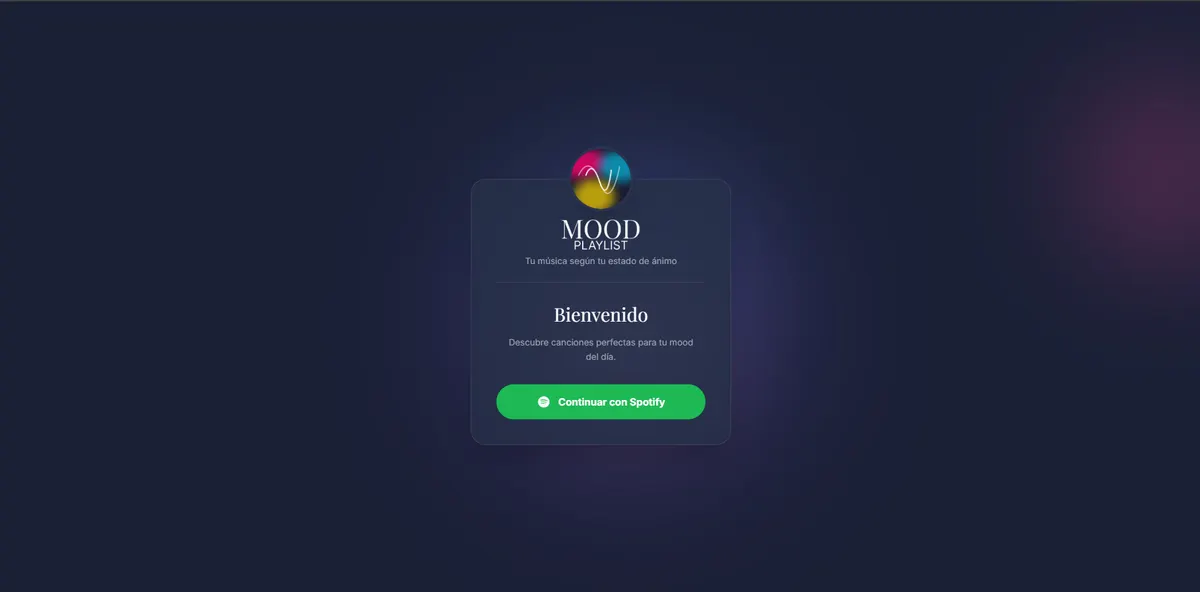
Four colours, each tied to an emotion — electric cyan, solar gold, dramatic pink, deep blue — with Playfair Display for headlines and Inter for the interface. On top of that, twelve screens and the components specific to the domain: the emotion counter, the mood selector and the song card.
Hit play on TikTok: