
Layout & Design System(Feb–May 2024)
I joined the Layout team to help grow the platform's design system: reusable components and improvements to the main SaaS application's layout.
I took part in migrating the whole application from Bulma to Tailwind CSS to unify styles under the design system's tokens and remove accumulated CSS overrides, while the whole team reworked the HTML with semantic tags, fixed the heading hierarchy, and properly associated labels with form fields. Creating or editing screens became faster, more consistent and more accessible for screen readers and keyboard navigation.
E-commerce: migration and product(May 2024–Feb 2026)
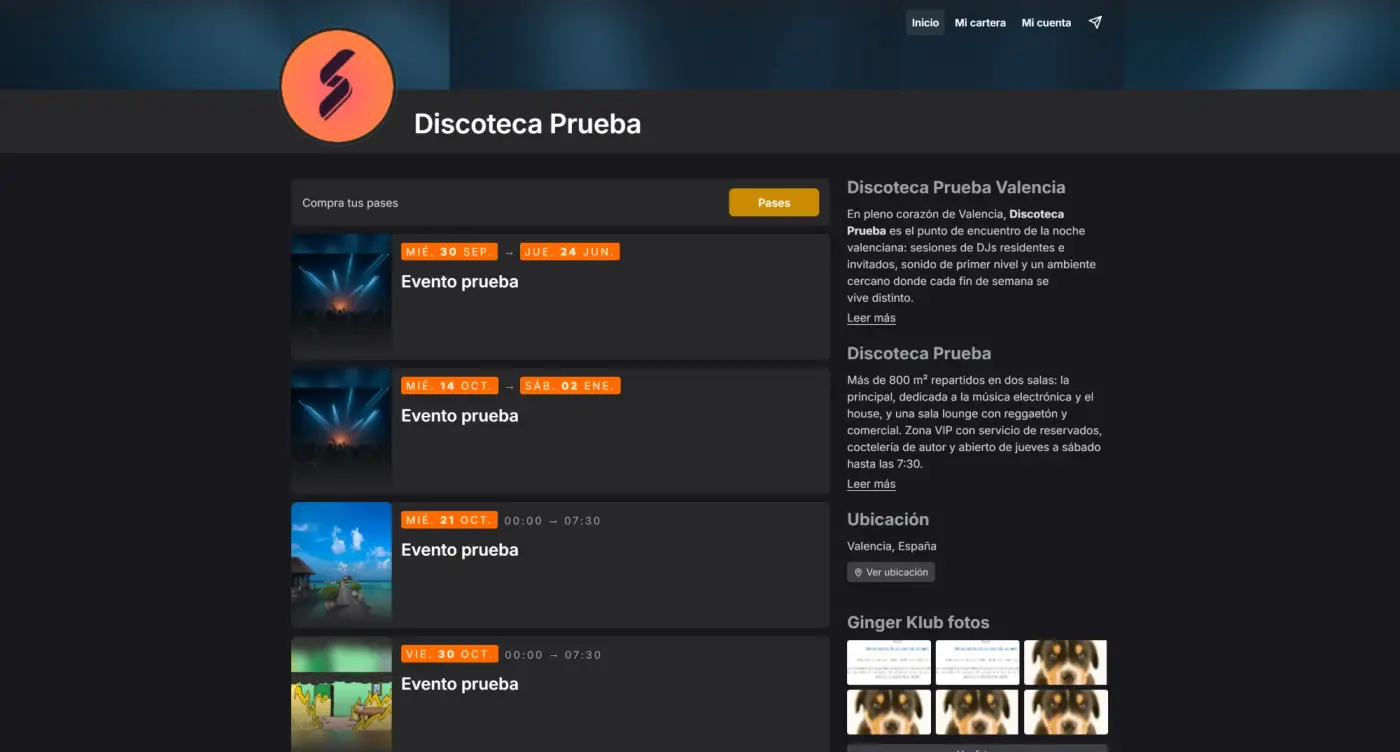
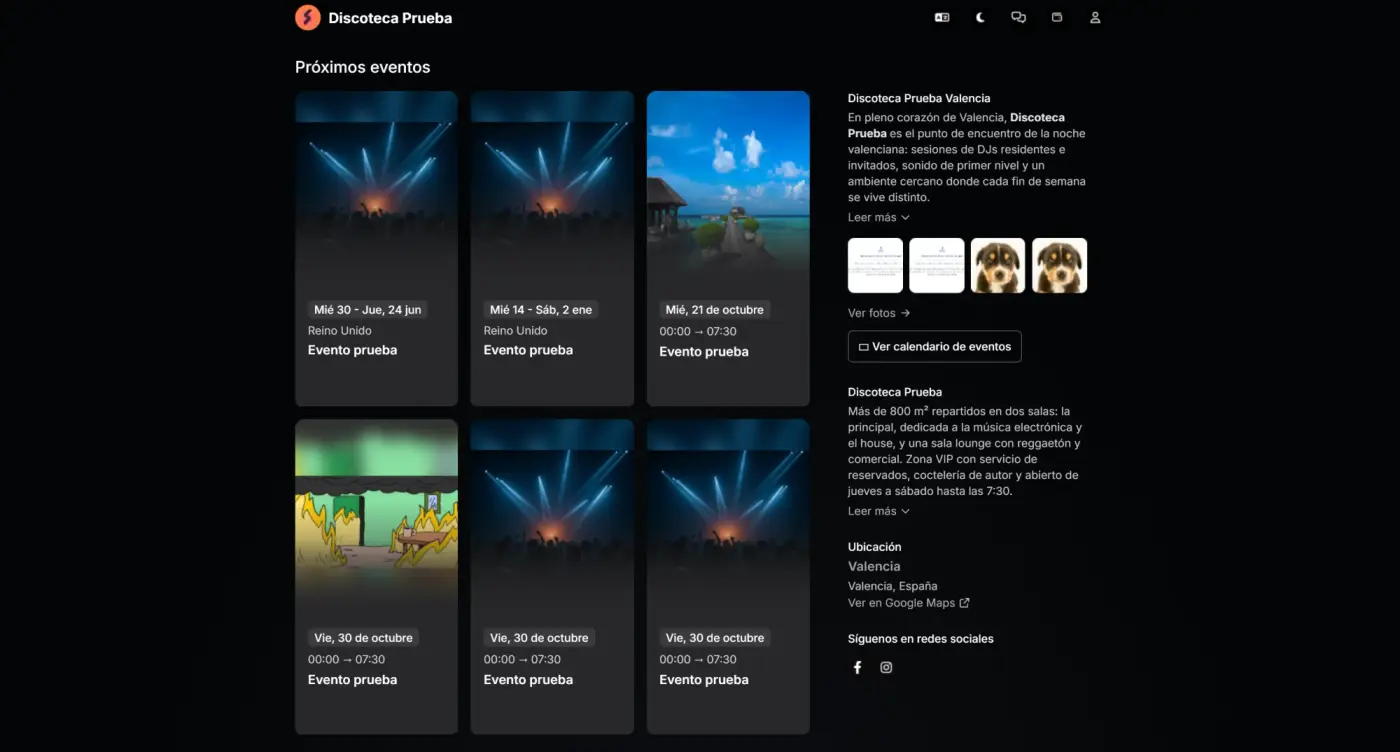
I moved to the e-commerce domain: the microsites and iframes venues use to sell tickets, bookings and guest lists directly to their audience. I took part in the migration from PHP to Angular Universal (SSR), improving load times and search engine positioning.
We built a reusable component system that reduced code duplication between microsites and iframes, and simplified onboarding specific use cases for new clients.
I adapted the design system's components to work with SSR, keeping visual consistency across the whole e-commerce. I also took accessibility from zero to 100% of the pre-purchase screens: colour contrast, screen readers and keyboard navigation.
We practically eliminated custom-built code and sped up development with the new component library, simplified onboarding specific use cases for new clients by applying good software design patterns, and audited and improved the SEO of the migrated screens.
Before
After
Domain frontend reference(Feb–Jun 2026)
I took on the role of frontend reference for the e-commerce domain, which saw peaks of up to 9 million requests a day. I defined the technical roadmap and coordinated with other domains on their work within their respective purchase flows. I was also responsible for production deployments.
I reorganised the application's architecture into independent modules (bounded contexts with hexagonal architecture and DDD), to make it easier to maintain, test and scale.
Product initiatives
It wasn't all migration and architecture: in parallel, I also took part in these product features alongside design, product and business.
Event pre-registration
A feature for venues to capture their audience before sales open. This lets them measure real demand and build their own database, with explicit consent. Together with design, product and Account Management, we scoped an MVP that we launched in two weeks, with segmented consent and automatic data deletion after the event. A week later we launched a second iteration based on user feedback.
+32% in sales on launch dayEvent groups
A feature for venues to apply settings to several events at once and get filtered sales links for each group. Especially useful for high-volume promoters with several brands in their weekly lineup or similar event cycles. It lets them promote whole series with a single link and propagate any change to every event in the group, which eliminates configuration errors.
Configuring several events goes from hours to one clickSending tickets via WhatsApp
A feature for attendees to receive their tickets via WhatsApp, the channel they use most, instead of relying only on email. It's offered as an optional paid service that improves the attendee experience and generates additional revenue on every sale, both for the platform and for venues.
A new revenue stream on every sale